
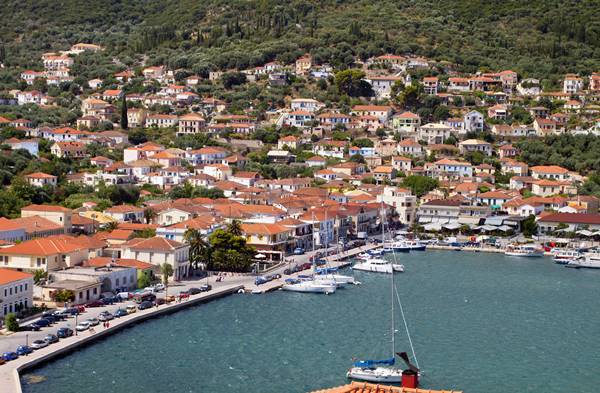
Things to See and Do in Ithaca Island
Visit the Palace of Odysseus Ruins
Wondering where all the things you learned in ancient Greek history or Homer’s ancient poetry about Odysseus and Penelope are located?

Archaeologists speculate that the palace of Odysseus was located in the area near the village of Exogi,

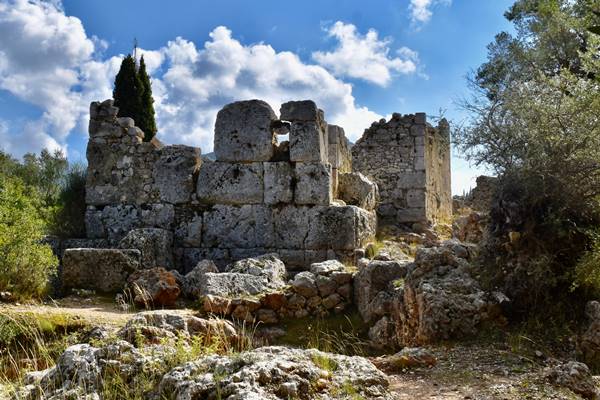
specifically at the site known for centuries as Homer’s School (many archaeological discoveries in the world have resulted from speculations arising from local traditions and local legends that passed down from generation to generation).
Pyramids of Exogi Village
Heading towards the village of Exogi, proceeding through its narrow streets, we reach the pyramids of Exogi from where we can enjoy the view towards Afales Beach.
The tallest pyramid, which is cylindrical, is made of millstones, while the second one is triangular.
They were built in 1938 by John Pappas a wealthy businessman from Ithaca, who according to some accounts lived out his last years at this spot pretending to be a beggar when in reality he was a rich robin of the woods. He was finding out which families on the island had financial problems and secretly left money at home to help them.
John Pappas who died in 1972 bequeathed his estate to the Red Cross. His tomb is located just below the pyramids near his favorite cave.
Alalkomenes Ancient Town and Acropolis – Aetos Hill
The ancient city of Alalkomenes, located on the Aetos hill, is believed to have been the ancient city of Ithaca.
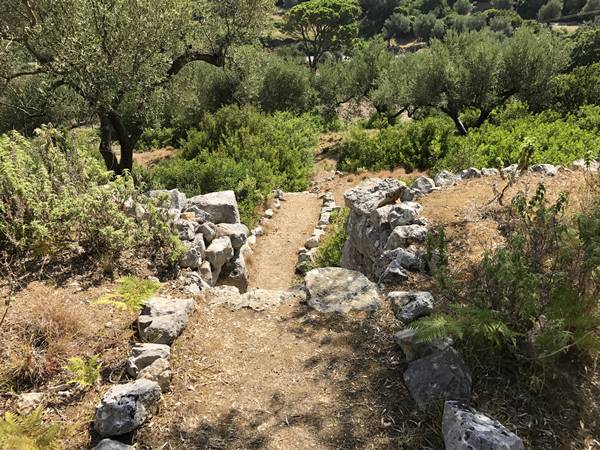
Ancient copper coins with the figure of Odysseus and the greek language inscription “ΙΘΑΚΩΝ” (means from Ithaca) have been found there after archaeological research.
The above archaeological findings can be seen in the archaeological museum in Vathi.
Cave of the Nymphs (Supposed) (Marmarospilia)
According to the inhabitants of Ithaca and according to the road signs, the cave of the nymphs is located in the area of Spartias 2 km west of Vathi.
Apart from the 2 entrances that the cave has, no other evidence in the text of Homer’s Odyssey leads to the conclusion that this is the cave of the Naiad nymphs.
Cave of the Nymphs (Authentic One) – Loizos Cave
…and at the head of the harbor is a slender-leaved olive | and near by it a lovely and murky cave | sacred to the nymphs called Naiads. | Within are kraters and amphoras | of stone, where bees lay up stores of honey. | Inside, too, are massive stone looms and there the nymphs | weave sea-purple cloth, a wonder to see. | The water flows unceasingly. The cave has two gates, | the one from the north, a path for men to descend, | while the other, toward the south, is divine. Men do not | enter by this one, but it is rather a path for immortals. Homer’s Odyssey
The cave got its name from its owner Loizos in the 19th century who discovered ancient artifacts during works he did. From then on the archaeologists took over.
The cave has two entrances – one of which is now under the sea – it is located at the head of an ancient harbor of Polis and there are olive trees nearby.
The rise of the sea level, as well as the landslides caused by the earthquakes over the centuries, make further archaeological research dangerous.
From the excavations so far, archaeologists are led to the conclusion that this specific cave has been used as a place of worship since 2500 BC.
Evergreen Oak Tree Forest of Perachori
Explore the forest with the Aries (pronounced Ar – yes) with the help of a local guide and enjoy the natural beauty of the area.
Walk through the bushy forest of the area among aromatic plants and flowers and if you’re lucky you might even see hedgehogs, hares and stone martens.
Moni Katharon (Monastery of Panagia Kathariotissa)
Enjoy the wonderful panoramic view of Vathi and Kefalonia Island – especialy from the bell.
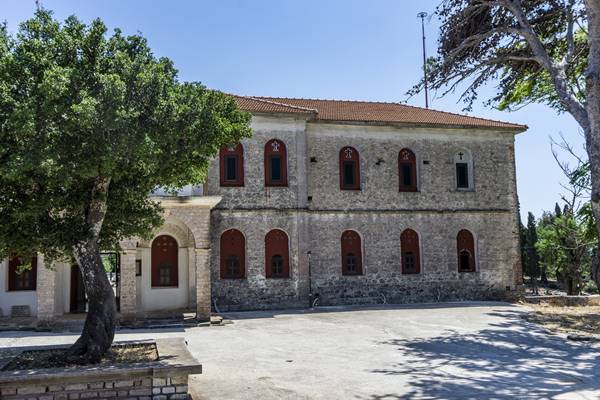
The monastery played an important role during the 1820s, as it treated wounded warriors of the Greek revolution
Visit the countless Picturesque Chapels, Monasteries and Churches
Eleousa Chapel Pernarakia
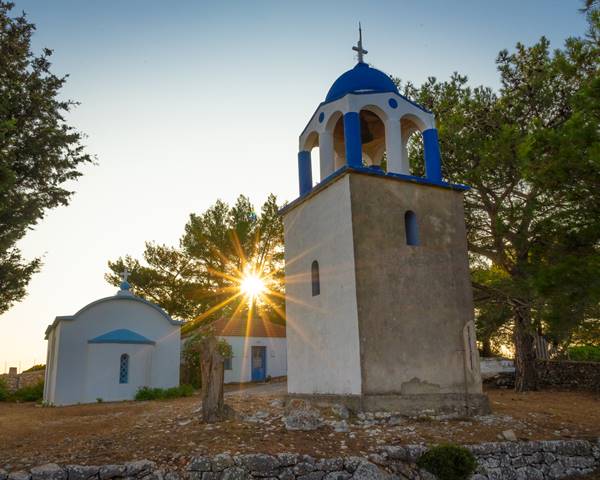
Vathi: St. Sophia, St. Theodore, St. Constantine, St. Andrew, Church of St. Efstathios (Eustace) at Vounaki, Church of Vlachernae
Kioni: St. Nicholas (Viggla), St. Nicholas Mavronas, Church of St John the Baptist
Archaeological Museum of Ithaca
In the first room, finds from the Proto-Geometric and Geometric era (1000 – 700 BC) are exhibited, mainly clay vases, including an important group of vases from a local workshop, as well as bronze and ivory objects, which are either accessories or tributes ( tamas).
The second room houses finds from the 7th c. e.g. These include clay vases from local and foreign workshops and several elaborate ceremonial vases, while the horizontal showcase houses the fragments of a local winemaker from the 7th century. BC, in which there is the oldest known inscription, where the institutions of Filia and Xenia are mentioned. This inscription is metered in dactylic hexameter, the measure of the Homeric Epics.
In the third room, finds from different periods and locations are exhibited. Few finds come from the northern part of the island which were found in excavations of the end of the 19th century and the beginning of the 20th. Among them stand out a tiny bronze bust of a bearded man with a conical cap, the opium associated with Odysseus and an inscription of the 6th c. e.g. with “boustrophidon” script, on which the names of the goddess Athena and Hera are written. The collection of clay figurines is of interest, as well as the votive offerings from the sanctuary of the nymphs of Marmarospelia and the bronze coins of Ithaca, on which the figure of Odysseus and the inscription ITHAKON can be distinguished. Also on display in the third room is a life-size early period Roman marble bust from Vathy Ithakis.
Source: odysseus.culture.gr
Folklore and Nautical Museum
It is located in Vathi
Stavros Archaeological Collection
The Archaeological Collection of Stavros houses finds from the wider area of the village of Stavros.
The finds on display date from the early Bronze Age (3rd millennium BC) to Roman times. They come from four places: the hill of Pilicatos, where the building of the Collection is also located, the village of Stavros, the cave of Loizou and the Three Lagades.
There are clay vessels and stone tools from the early Bronze Age settlement at Pelikata, clay vessels from the Mycenaean settlement of Trio Lagados and classical/Hellenistic grave offerings from the village of Stavros.
Findings from the Mycenaean to the Roman era were discovered in the cave of Loizos. There are many finds, but the ones that impress are the fragments of the bronze geometric tripods with the elaborate decoration, as well as a fragment of a Hellenistic mask, on which the inscription “ΕΥΧΗΝ ΟΔΥΣΣΕΙ” (meaning prayer to Odysseus) is engraved. The reference to Odysseus is evidence of his worship in this specific cave and according to expansion to Ithaca, while in association with the bronze tripods, they refer to the verse of the Homeric Odyssey in which the Phaeacians presented Odysseus with 13 bronze tripods.
Source: odysseus.culture.gr
Kioni
Kioni sits on Ithaca’s northeast coast, around a sheltered harbour that still works as a stop for fishing boats and sailing yachts. The village dates back to the 16th century, when people from inland settlements moved closer to the sea, and its houses rise in tight layers from the waterfront up the hillside.
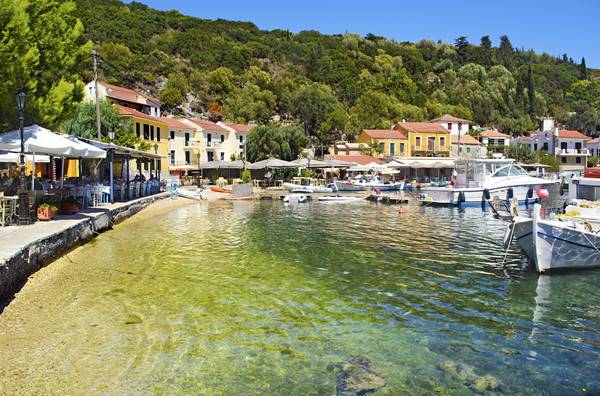
The most recognisable feature is the group of three stone windmills at Psigadi, on the headland near the harbour entrance. They were used for grinding grain until around the First World War. Today only the main stone bodies remain, without their roofs or working mechanisms.
Kioni is a good place to slow down for a couple of hours rather than rush through. Walk along the harbour, look back at the village from the water’s edge, and take the path or road towards the windmills for a wider view of the bay. In summer the harbour can be busy with yachts, so early morning or late afternoon is usually the easiest time to see it without the waterfront feeling crowded.
Frikes Harbour
Frikes Harbour is a small working port on Ithaca’s north coast, about 5 km from Kioni and 3 km from Stavros.

The village grew from the 16th century, when people from the surrounding hills began using the natural harbour for fishing and trade with Lefkada and the mainland. Some scholars identify it with Homer’s Reithron harbour, though this remains a theory rather than a confirmed site. Today it is still practical as well as scenic: local boats use the quay, yachts stop here in summer, and seasonal ferries connect Frikes with Lefkada (Vasiliki), Kefalonia (Fiskardo) and Astakos
Ithaca Beaches
Ithaca’s beaches are mostly small pebble coves rather than long sandy bays. Many are reached by road, steps, or boat, and facilities vary a lot, so it is sensible to check access before setting out. Filiatro, Dexia, Polis, and Sarakiniko are among the easier options; Gidaki, Afales, and some northern coves need more planning.
Afales Beach
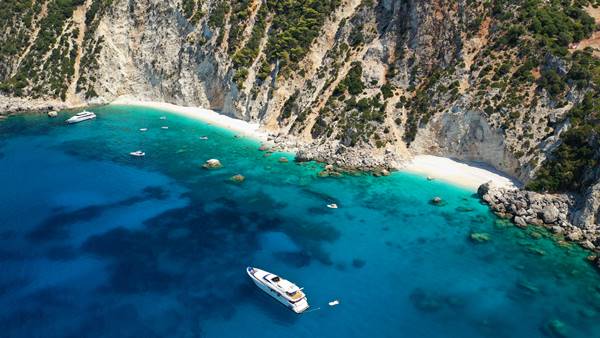
Afales is a large bay in northern Ithaca, known for steep cliffs and several small pebble beaches.
Some parts are easier by boat, especially the more secluded coves around the bay. There are no organised facilities, and conditions can change when northern winds pick up.
Aspros Gialos Beach
Aspros Gialos, also linked with the Agios Ioannis area, is on Ithaca’s western side.
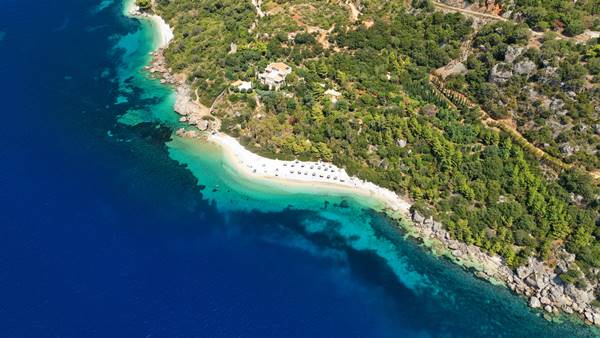
It has pale pebbles, clear water, and views across to Kefalonia. Access is by road, followed by a short walk or steps down from the parking area.
Dexia Beach
Dexia is close to Vathy, so it is one of the simplest beaches to reach without making a full day excursion.
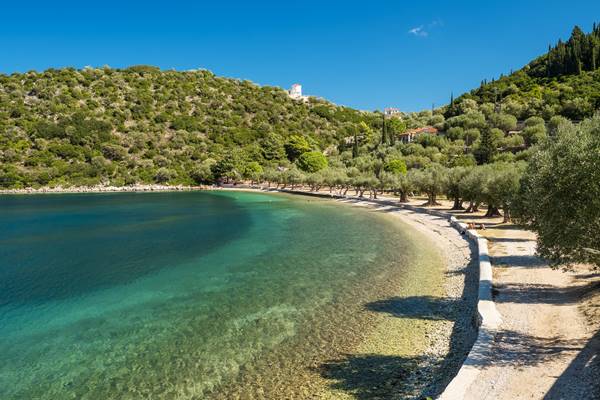
The bay is shallow near the shore, with olive trees providing some natural shade. Local tradition also connects the area with Odysseus’ return to Ithaca.
Filiatro Beach
Filiatro sits in a sheltered bay east of Vathy and is one of Ithaca’s more organised beaches.

Expect white pebbles, clear water, some sunbeds and umbrellas, and a beach bar in season. It is popular, so parking and space are easier earlier in the day.
Frikes Beach
Frikes Beach lies by the small harbour village on Ithaca’s north coast.
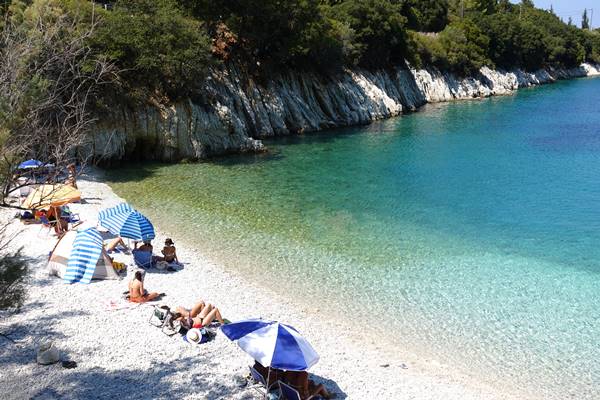
It is a practical swimming stop if you are staying in or passing through Frikes, with tavernas and cafés nearby rather than a remote beach feel. The village also has seasonal boat links and a working waterfront.
Gidaki Beach
Gidaki is reached either by boat from Vathy or by combining road access with a walk from the Skinos area.
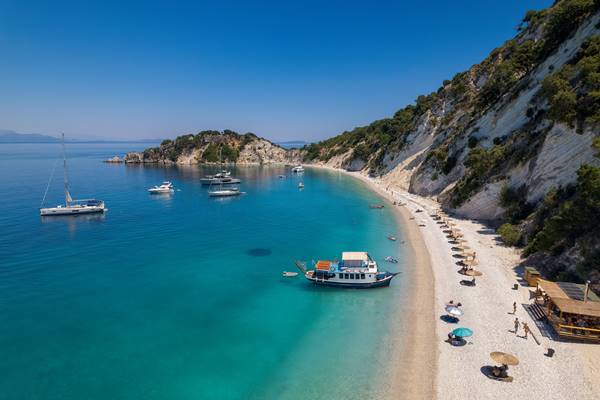
The beach is pebbled, backed by steep green slopes, and has limited seasonal facilities, including a small snack bar in summer.
Krovoulia Beach
Krovoulia, often written Kourvoulia, refers to three small coves near Frikes.
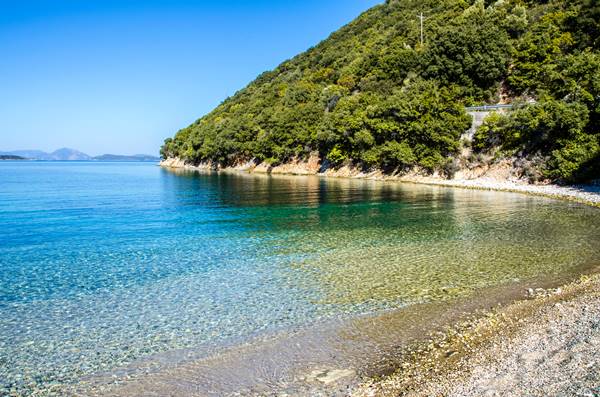
They sit along the road between Frikes and Kioni, with steps down to some sections. There are no major facilities, so bring water and footwear for the pebbles.
Mavrouna Beach
Mavrouna is a small pebble beach close to Kioni, next to Agios Nicolaos Chapel useful for a quieter swim without going far from the village.
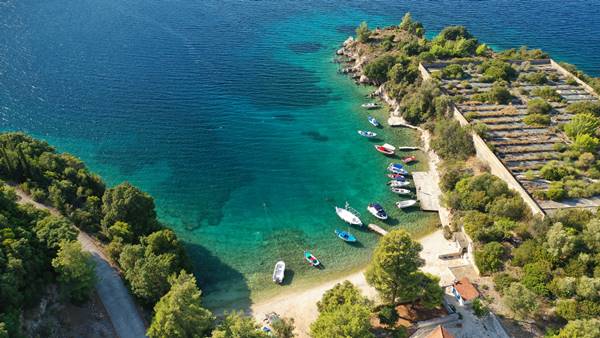
It has no organised facilities and is better treated as a short stop than a full service beach day. The shore is narrow, with clear water and rocky surroundings.
Pisaetos Beach
Pisaetos is near Ithaca’s westcoast ferry port, southwest of Vathy.
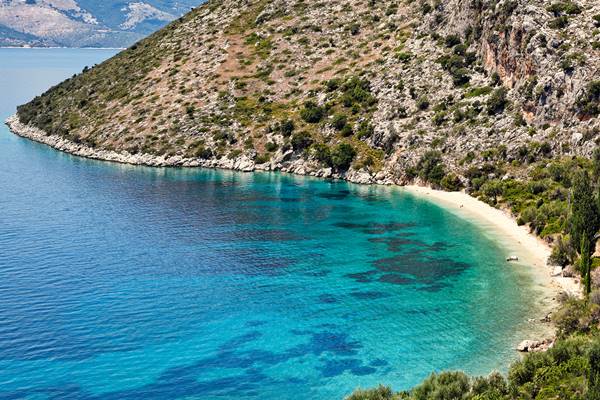
It is a small rocky or pebbly beach beside a practical transport point, so the setting is different from the island’s quieter coves. It can work for a swim before or after ferry travel.
Polis Beach
Polis Beach is near Stavros, on the northwestern side of Ithaca.
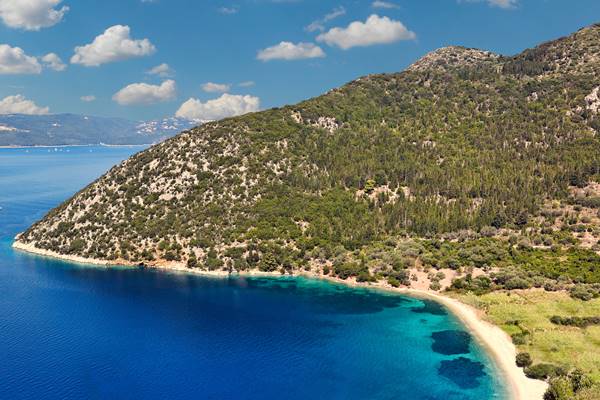
It has pebbles, a small fishermen’s harbour, and seasonal facilities such as sunbeds, a snack bar, and water-sports rentals. The bay is also linked with ancient remains in the wider Polis area.
Sarakiniko Beach Ithaca
Sarakiniko is a bay southeast of Vathy with two pebble coves.
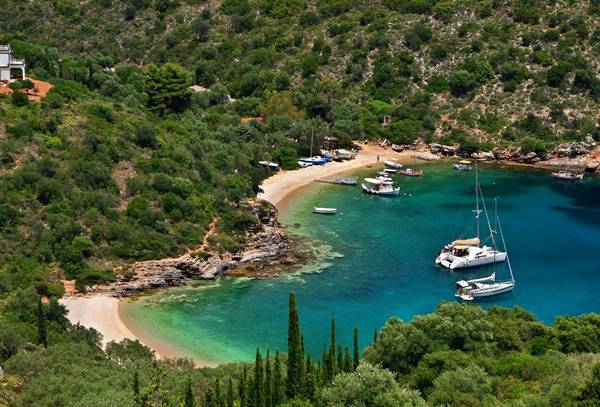
The eastern side is used by fishing boats and has a small dock, while the western side is quieter. It is reached by road and usually has some summer facilities.
Skinos Beach
Skinos, also written Schinos, is reached after passing the Mnimata area and continuing on foot.

It is a pebbled cove with cypress trees and no facilities, so bring water and anything else needed. The clear water makes it a good choice for snorkelling.
Where to Stay
Hotels
Vathi Hotels
Familia Hotel, Perantzada Art Hotel, Korina Gallery Hotel, Dioskouroi I, Calypso Apartments, Hotel Omirikon, Mentor Hotel, Petros Apartments
Frikes Hotels
Aristotelis Apartments, Hotel Nostos
Kioni Hotels
Likoudis Villas
Apartments
Vathi Apartments
Levantes Houses, Anticlea I, Anticlea II, Maroudas Stavros Apartments, Odysseion Apartments, Iris Apartments Ithaca
Kioni Apartments
Aprilis Apartments, Captain’s Apartments, Pebbles of Kioni
Lefki Apartments
Villa Tramonto
Stavros Apartments
Gardenia, Tesoro of Ithaca, Iriana Village Inn, Spilia
Frikes Apartments
Aristotelis Apartments, Dourios Ippos Apartments
Exogi Apartments
Afales Villa Studios – Kolieri
Perachori Apartments
Dioni Holiday House
Restaurants
Ageri, Gefyri, Kohili, Chani, Dona Lefki, Kanenas, Mills, O Batis, Poseidon, Sirines, Roses, Trehantiri, Calypso, Kantouni, Mythos, Kalioras
Cafes and Bars
Dentrakia, Blackout, Spavento, Soneto, Sesto, Arkeisios
Pingback: Ithaca (Ithaki) Greece Bus Timetable - Lost Voyager